ghk cu wirkmechanismus forschung
GHK-Cu-Wirkmechanismus in präklinischen Forschungsmodellen
Ein forschungsorientierter Überblick zu GHK-Cu-Signalthemen aus der Literatur zu extrazellulärer Matrix und Zellkultur.
Artikel erscheint in Kürze
VerkaufshotlinePriorisierter Vertrieb — Angebot innerhalb von 24 Stunden
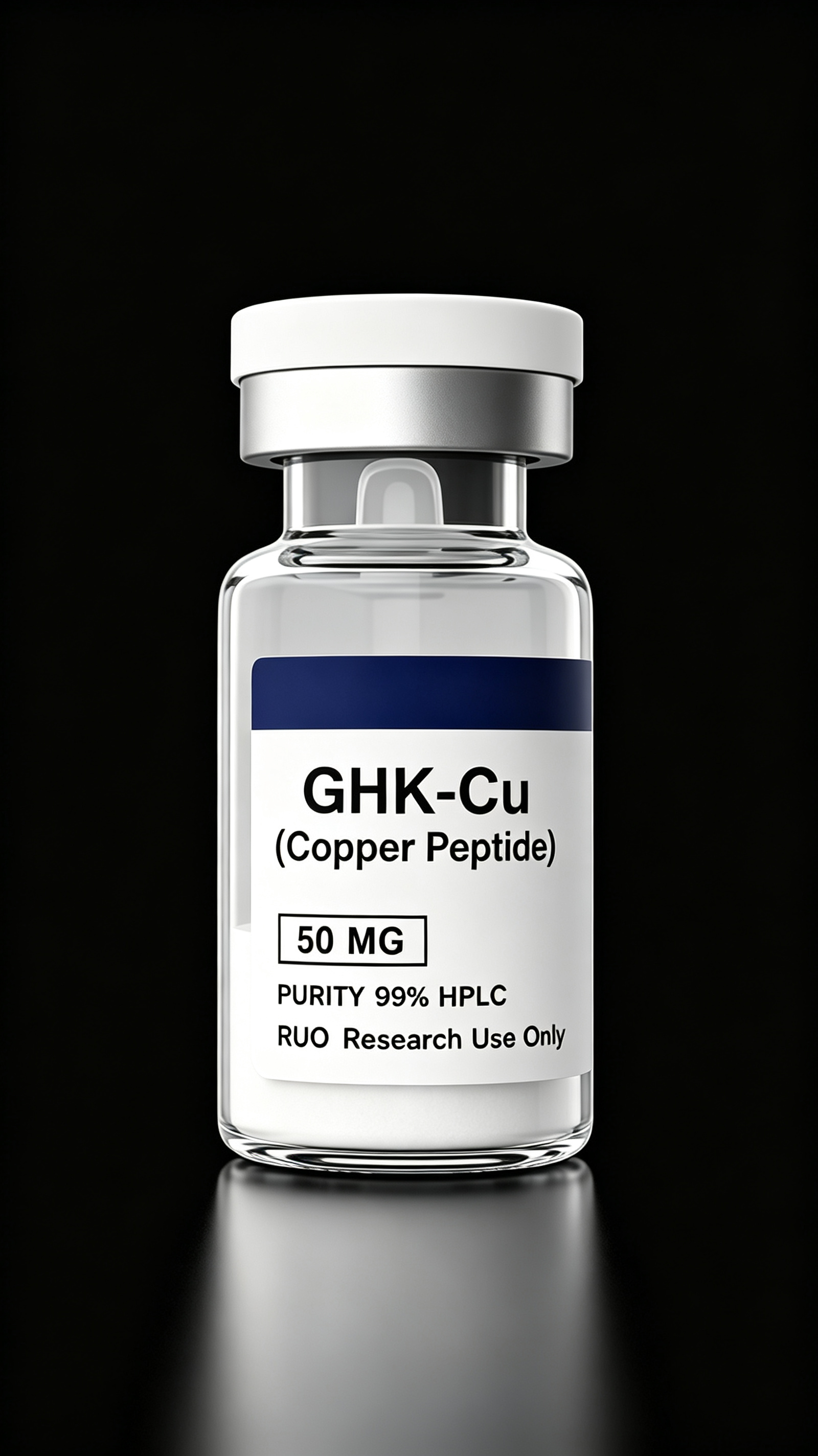
GHK-Cu ist ein natürlich vorkommendes Tripeptid-Kupfer-Chelat mit einem Molekulargewicht von etwa 403 Da (freies Peptid) bzw. 465 Da (Kupferkomplex), das in präklinischen Labormodellen zu extrazellulären Matrix-bezogenen Signalwegen untersucht wird.
Forschungs-SKUs aus diesem Hub. Prüfen Sie die CoA-Felder vor der Bestellung.
GHK-Cu (glycyl-L-histidyl-L-lysine copper) is a naturally occurring copper-binding tripeptide first isolated from human plasma and studied since the 1970s for its reported effects in extracellular matrix remodeling models. The free tripeptide GHK (Gly-His-Lys) coordinates a single copper(II) ion to form the GHK-Cu complex, which is the form most commonly supplied for laboratory investigation. Because copper coordination changes both the stability and the reported bioactivity profile of the peptide, research-grade sourcing decisions typically center on complex integrity and batch-level analytical documentation.
In preclinical cell-culture and tissue-model literature, GHK-Cu has been studied for themes related to matrix remodeling, fibroblast activity, and copper-dependent signaling pathways. It is important for procurement teams to note that published mechanistic work rarely maps one-to-one to a specific catalog lot; the responsible purchasing approach is to treat the sequence, the copper complex, and the analytical certificate as separate variables to verify for each batch.
For copper peptides, the Certificate of Analysis should confirm three things before a lot is accepted for research use. First, peptide identity: HPLC retention time and mass confirmation (LC-MS or equivalent) should match the GHK-Cu reference. Second, purity: research-grade lots are commonly specified at ≥95% by HPLC area, though higher thresholds can be negotiated for specific assays. Third, copper content and appearance: the complex ratio and the physical form (lyophilized powder color and texture) are recorded on the CoA and should match the label.
Buyers working with reconstitution protocols should also record the lot-specific molecular weight assumption (free peptide vs copper complex) because it changes molarity calculations. Helix Peptide publishes batch documentation for each catalog lot and can supply the CoA before purchase through the COA Reports flow on this page.
Research catalogs frequently list GHK-Cu, AHK-Cu (a related copper tripeptide), and cosmetic copper tripeptide-1 (CTP-1). These share a copper-binding motif but differ in amino-acid sequence and in the reported signaling themes in the literature. AHK-Cu has been studied in different tissue contexts than GHK-Cu, and CTP-1 nomenclature is primarily used in cosmetic ingredient supply chains.
The experimental endpoint should drive the selection: extracellular matrix and fibroblast model studies most often reference GHK-Cu; comparative sequence studies may require both GHK-Cu and AHK-Cu; and formulation work may specify CTP-1 grade. Whichever construct is chosen, the CoA identity section must state the exact sequence supplied, since catalogs are not interchangeable on sequence alone.
Artikel, die Kollektions-Keywords stärken und zurück zu diesem Hub verlinken.
ghk cu wirkmechanismus forschung
Ein forschungsorientierter Überblick zu GHK-Cu-Signalthemen aus der Literatur zu extrazellulärer Matrix und Zellkultur.
Artikel erscheint in Kürze
ghk cu vs ahk cu forschungspeptid
Sequenz, Kupferkomplex-Rahmen und Dokumentationscheckpoints beim Vergleich von Kupfertripeptiden für den Laboreinsatz.
Artikel erscheint in Kürze
ghk cu analytische charakterisierung HPLC
Wie Einkäufer HPLC-Reinheit, Identität und CoA-Felder für GHK-Cu-Forschungschargen prüfen.
Artikel erscheint in Kürze
ghk cu dermale gewebeforschung
Präklinische dermale und Gewebemodell-Kontexte, in denen GHK-Cu in der Literatur diskutiert wird – ohne klinische Claims.
Artikel erscheint in Kürze
Das freie Tripeptid wird üblicherweise mit ~403 Da angegeben; der Kupferkomplex oft mit ~465 Da. Identität und Chargenwerte stets im Certificate of Analysis des jeweiligen Forschungsmaterials bestätigen.
Fordern Sie CoA-Muster, Packungsgrößen und Lieferzeiten für die SKUs dieser Kollektion an.