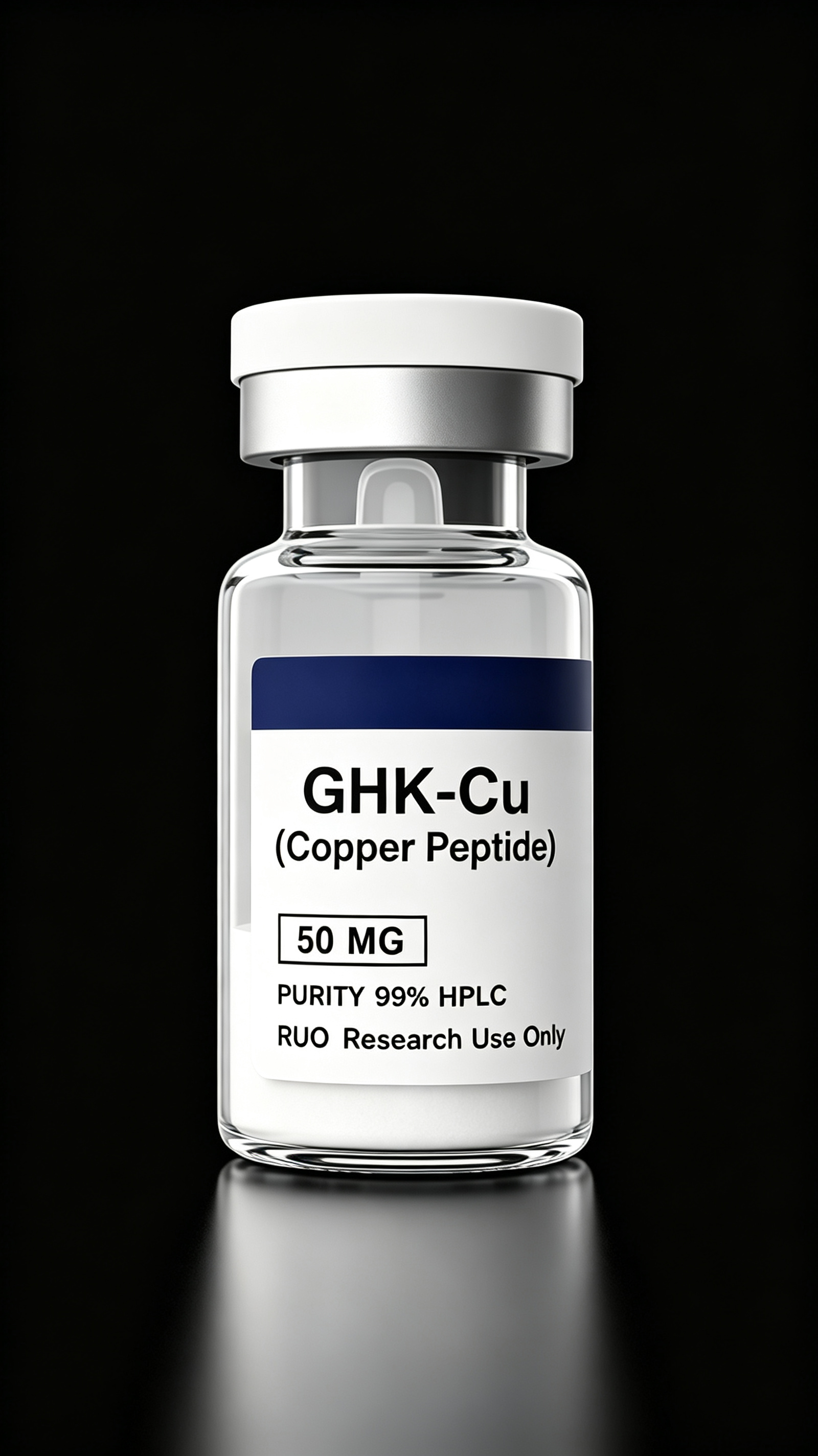
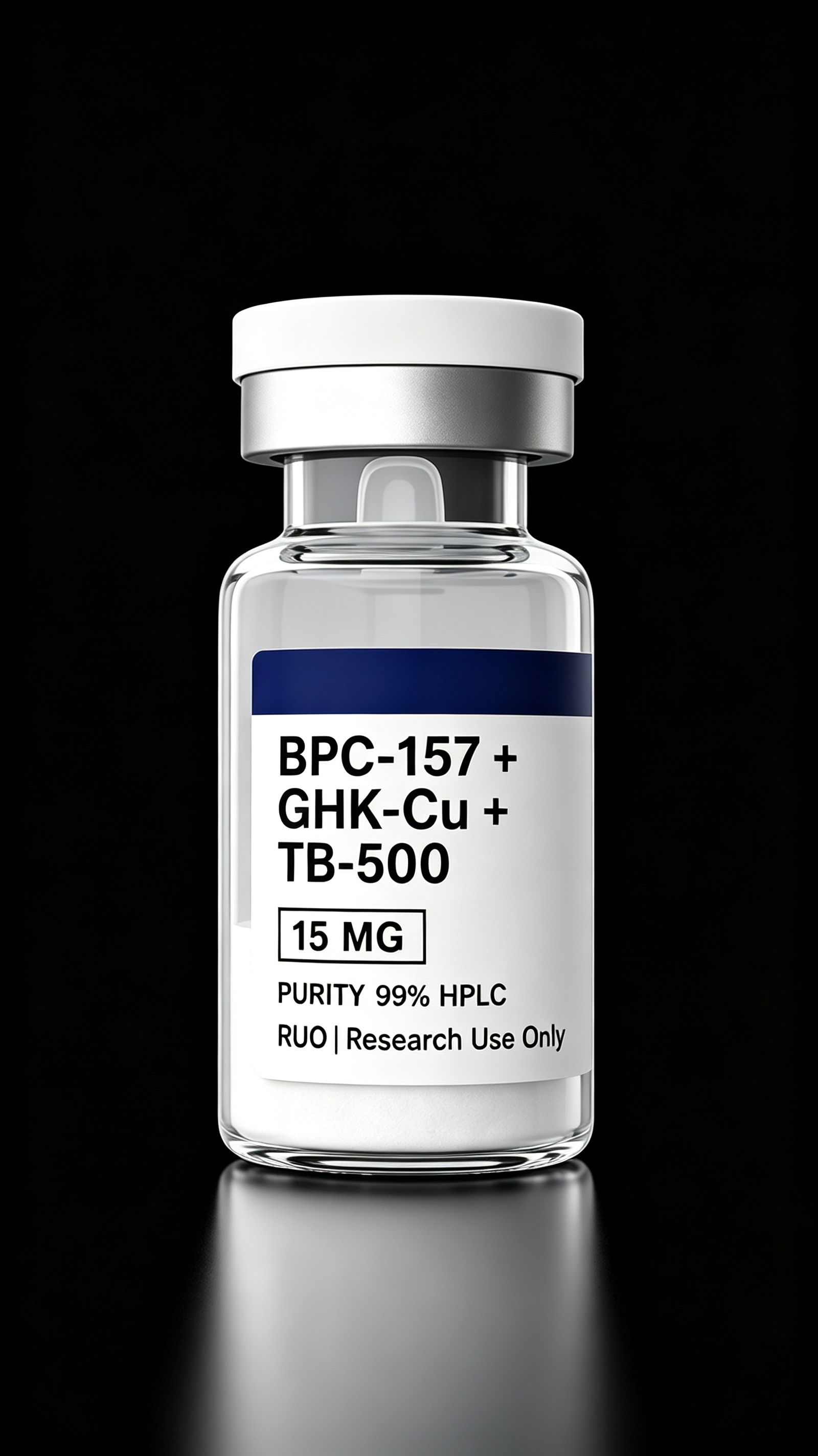
GHK-Cu (glycyl-L-histidyl-L-lysine copper) is a naturally occurring copper-binding tripeptide first isolated from human plasma and studied since the 1970s for its reported effects in extracellular matrix remodeling models. The free tripeptide GHK (Gly-His-Lys) coordinates a single copper(II) ion to form the GHK-Cu complex, which is the form most commonly supplied for laboratory investigation. Because copper coordination changes both the stability and the reported bioactivity profile of the peptide, research-grade sourcing decisions typically center on complex integrity and batch-level analytical documentation.
In preclinical cell-culture and tissue-model literature, GHK-Cu has been studied for themes related to matrix remodeling, fibroblast activity, and copper-dependent signaling pathways. It is important for procurement teams to note that published mechanistic work rarely maps one-to-one to a specific catalog lot; the responsible purchasing approach is to treat the sequence, the copper complex, and the analytical certificate as separate variables to verify for each batch.