pesquisa mecanismo de ação ghk cu
Mecanismo de ação do GHK-Cu em modelos de pesquisa pré-clínica
Uma visão enquadrada em pesquisa dos temas de sinalização do GHK-Cu reportados na literatura de matriz extracelular e cultura celular.
Artigo em breve
Linha de vendasVendas prioritárias — orçamento em 24 h
GHK-Cu é um quelato tripéptido-cobre de ocorrência natural com peso molecular de aproximadamente 403 Da (peptídeo livre) ou 465 Da (complexo de cobre), investigado em vias de sinalização relacionadas à matriz extracelular em modelos de laboratório pré-clínicos.
SKUs de grau pesquisa deste hub. Revise os campos CoA antes de pedir.
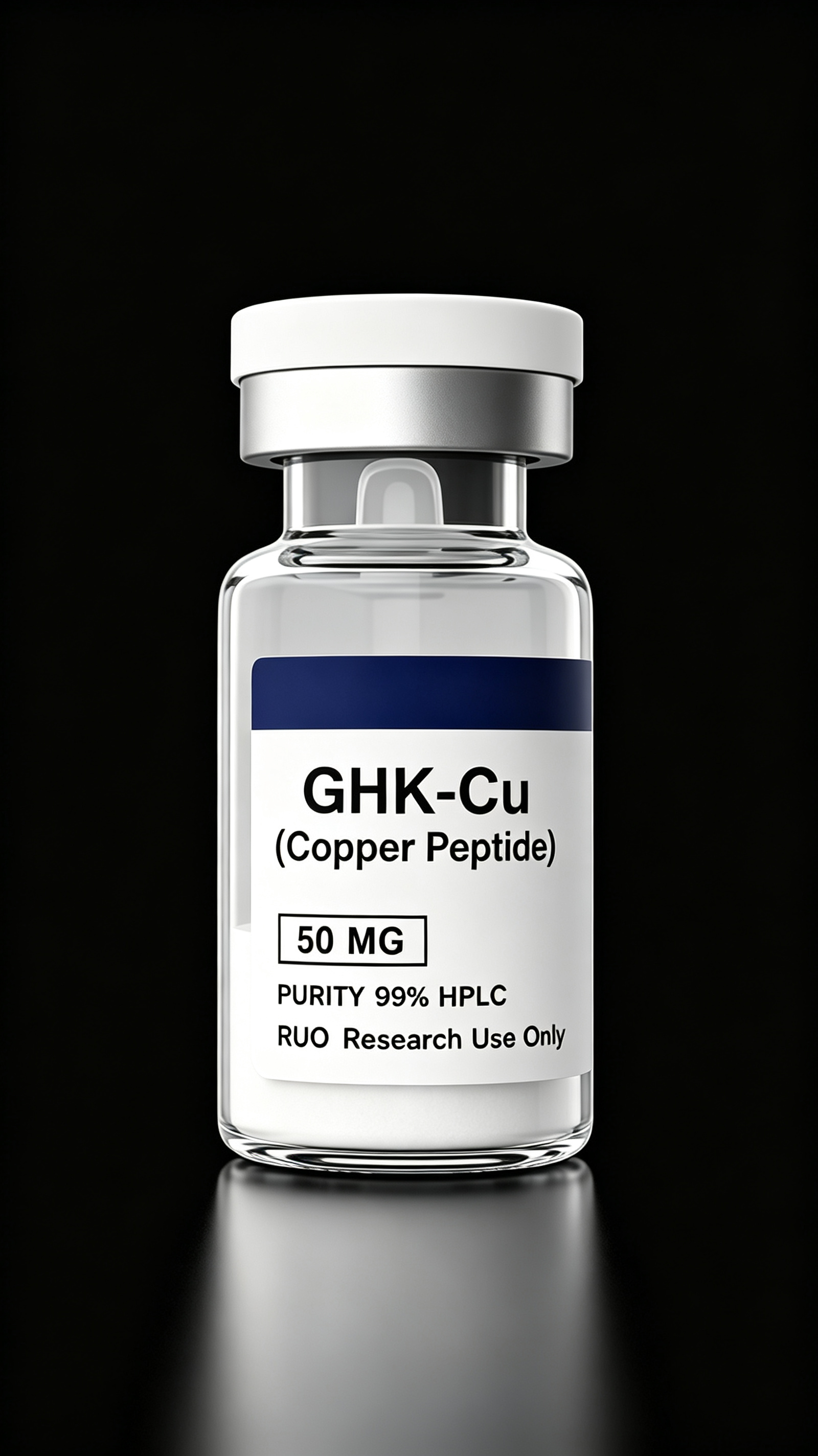
Sequências de estudo tecidual
Complexo tripeptídeo quelante de cobre fornecido com verificação de quelação para estudos dérmicos e cosméticos cruzados.
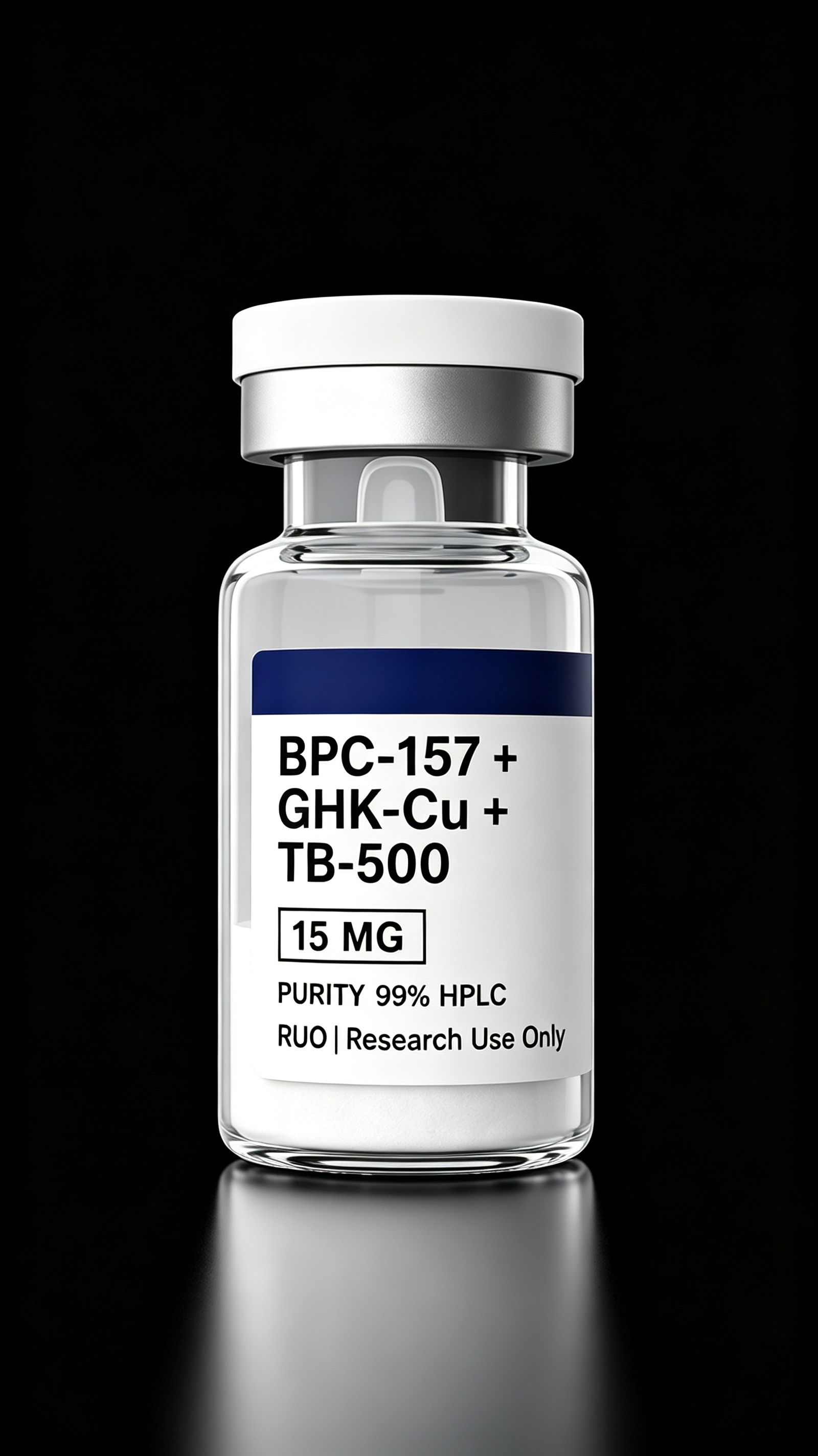
Fórmulas combinadas
Mistura proprietária de GHK-Cu, BPC-157 e TB-500 para desenvolvimento de formulações de rejuvenescimento dérmico.
GHK-Cu (glycyl-L-histidyl-L-lysine copper) is a naturally occurring copper-binding tripeptide first isolated from human plasma and studied since the 1970s for its reported effects in extracellular matrix remodeling models. The free tripeptide GHK (Gly-His-Lys) coordinates a single copper(II) ion to form the GHK-Cu complex, which is the form most commonly supplied for laboratory investigation. Because copper coordination changes both the stability and the reported bioactivity profile of the peptide, research-grade sourcing decisions typically center on complex integrity and batch-level analytical documentation.
In preclinical cell-culture and tissue-model literature, GHK-Cu has been studied for themes related to matrix remodeling, fibroblast activity, and copper-dependent signaling pathways. It is important for procurement teams to note that published mechanistic work rarely maps one-to-one to a specific catalog lot; the responsible purchasing approach is to treat the sequence, the copper complex, and the analytical certificate as separate variables to verify for each batch.
For copper peptides, the Certificate of Analysis should confirm three things before a lot is accepted for research use. First, peptide identity: HPLC retention time and mass confirmation (LC-MS or equivalent) should match the GHK-Cu reference. Second, purity: research-grade lots are commonly specified at ≥95% by HPLC area, though higher thresholds can be negotiated for specific assays. Third, copper content and appearance: the complex ratio and the physical form (lyophilized powder color and texture) are recorded on the CoA and should match the label.
Buyers working with reconstitution protocols should also record the lot-specific molecular weight assumption (free peptide vs copper complex) because it changes molarity calculations. Helix Peptide publishes batch documentation for each catalog lot and can supply the CoA before purchase through the COA Reports flow on this page.
Research catalogs frequently list GHK-Cu, AHK-Cu (a related copper tripeptide), and cosmetic copper tripeptide-1 (CTP-1). These share a copper-binding motif but differ in amino-acid sequence and in the reported signaling themes in the literature. AHK-Cu has been studied in different tissue contexts than GHK-Cu, and CTP-1 nomenclature is primarily used in cosmetic ingredient supply chains.
The experimental endpoint should drive the selection: extracellular matrix and fibroblast model studies most often reference GHK-Cu; comparative sequence studies may require both GHK-Cu and AHK-Cu; and formulation work may specify CTP-1 grade. Whichever construct is chosen, the CoA identity section must state the exact sequence supplied, since catalogs are not interchangeable on sequence alone.
Artigos que reforçam as palavras-chave da coleção e apontam para este hub.
pesquisa mecanismo de ação ghk cu
Uma visão enquadrada em pesquisa dos temas de sinalização do GHK-Cu reportados na literatura de matriz extracelular e cultura celular.
Artigo em breve
peptídeo de pesquisa ghk cu vs ahk cu
Sequência, enquadramento do complexo de cobre e pontos de verificação documental ao comparar tripéptidos de cobre para uso em laboratório.
Artigo em breve
caracterização analítica HPLC ghk cu
Como compradores revisam pureza HPLC, identidade e campos do CoA em lotes de pesquisa de GHK-Cu.
Artigo em breve
pesquisa tecido dérmico ghk cu
Contextos pré-clínicos dérmicos e de modelos de tecido onde o GHK-Cu é discutido na literatura—sem alegações clínicas.
Artigo em breve
O tripéptido livre é comumente citado perto de ~403 Da; o complexo de cobre é frequentemente reportado perto de ~465 Da. Confirme sempre a identidade e os valores do lote no Certificate of Analysis do material de pesquisa específico.
Peça amostras de CoA, embalagens e prazos para os SKUs desta coleção.